For anyone wondering how to meet people at museums, the strongest opening starts with the exhibit in front of both of you. Look for a natural pause between galleries, stand at a comfortable distance, and offer one specific observation. The other visitor's response decides whether the conversation continues.
By Meet Naturally Editorial Team · Editorial policy ·
Why museums can create natural openings for conversation
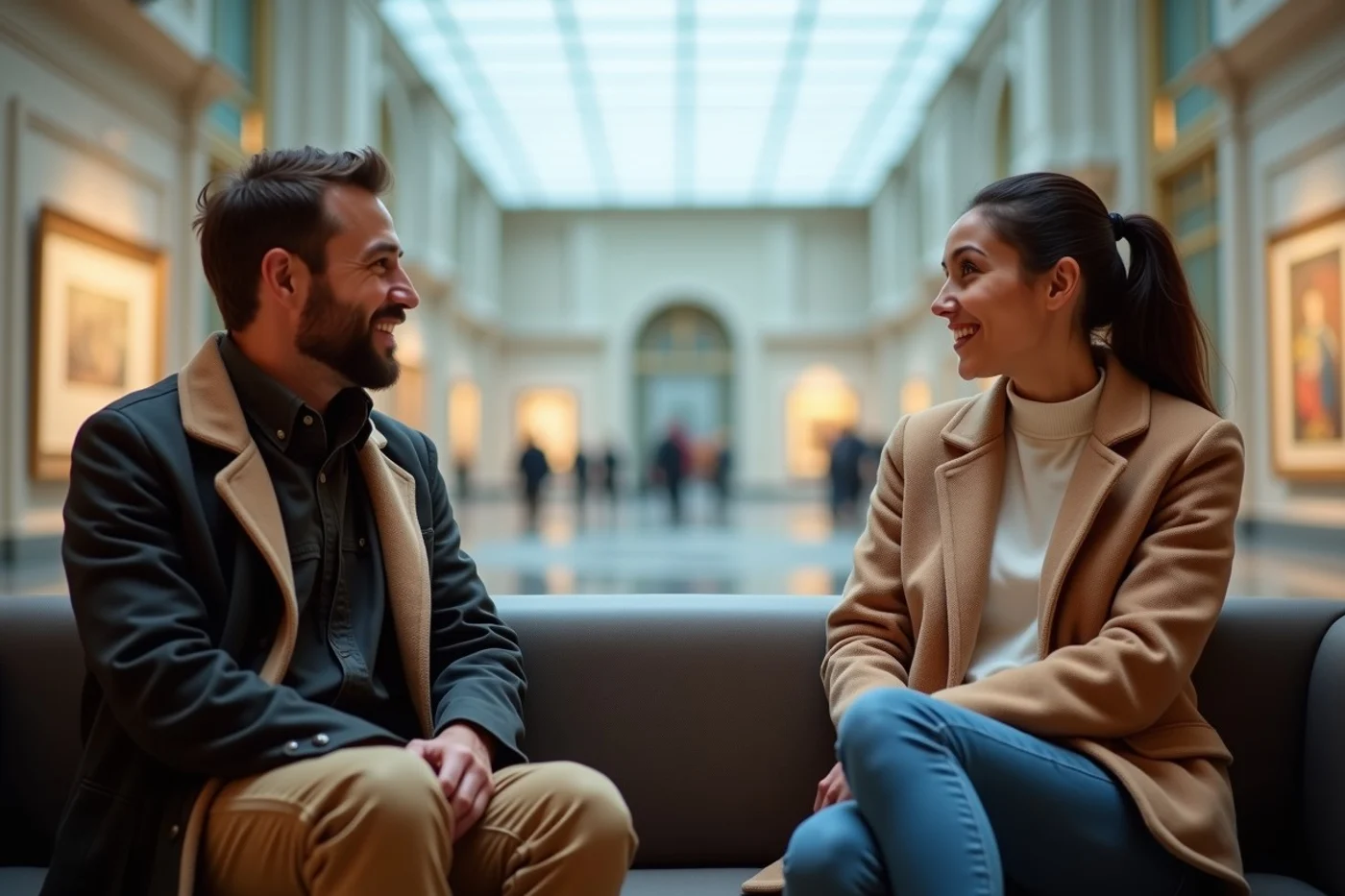
Shared attention does some of the conversational work. Two visitors studying the same painting, turning toward the same unusual object, or lingering over an interactive display already have a visible subject in common. A brief comment about that subject feels connected to the setting, not dropped into it from nowhere.
The slower pace also helps. People move between rooms, stop, read, and look again. Those transitions create small openings that a busy entrance or crowded sidewalk rarely provides. A visible reaction, such as a smile or a puzzled look, offers a more grounded starting point than an assumption about someone's appearance or availability.
Still, a museum remains a place for individual attention. Someone absorbed in a long label, wearing headphones, taking notes, or moving steadily through the galleries is signaling concentration. The exhibit creates an opening; it does not grant access. Use the shared subject, then read the visitor.
Which museum areas make conversation easier to begin
2
Galleries
A specific artwork supplies an immediate subject, especially when both visitors pause at the same display.
Quiet rooms call for a low voice and a short opening. Someone deeply focused on the work deserves uninterrupted space.
Interactive exhibits
A shared reaction or practical task creates an obvious reason to speak.
Crowding and turn-taking matter. Wait until the display is free and avoid interrupting someone halfway through it.
Public tours
The tour provides shared context and a natural conversation point during a transition between rooms.
The guide controls the setting. Speak before the tour begins or after it ends, not while the group is receiving instruction.
Workshops
Working at nearby tables gives people repeated, task-related chances to talk.
Participation comes first. Keep early conversation connected to the activity and let personal topics develop gradually.
Cafes
A seating area offers a transition out of gallery concentration and supports a longer exchange.
A visitor eating, working, or reading alone is occupied. Shared seating or a visible break is a better opening than approaching a settled table.
Crowded entrances
Arrival creates a shared moment, especially around a posted exhibit or event.
Traffic, tickets, and bags compete for attention. The entrance is usually a poor place for a personal approach.
Choose a respectful moment and opening near an exhibit
| Step | Action |
|---|---|
| 1 | Read the visitor's attention. A person who has just finished viewing a display and remains nearby is more available for a brief exchange than someone still reading, photographing, or moving toward the next room. |
| 2 | Stand beside the display, keeping the artwork, label, and walkway clear. Do not follow someone from room to room waiting for an opening. The approach should happen where your shared interest is already visible. |
| 3 | Use one concrete observation or question about the exhibit. A line such as "That detail keeps pulling my attention - what did you notice first?" invites a reaction without testing the visitor's knowledge. |
| 4 | Give the reply space to arrive. A short answer followed by renewed attention to the artwork is enough information to stop. A detailed response, eye contact, or a question back supports one more turn. |
| 5 | Keep the first exchange brief. Two or three conversational turns establish whether the moment has energy; they do not require a full tour of the museum together. |
Keep the discussion personal without turning it into an art quiz
Once the visitor responds, move from the object to their reaction. Ask what drew them to the piece, which part stayed with them, or whether the subject connects with an interest outside the museum. These questions invite personality without demanding specialist knowledge.
Your own response should be short and specific. Mention the color, scale, subject, or mood that caught your attention, then let the exchange develop. A string of questions feels like an interview; a reaction followed by one relevant question feels like participation.
The conversation has done its job when both people contribute something beyond exhibit facts. From there, related interests, past museum visits, or the next room offer better material than a rapid list of personal questions.
Notice whether the other visitor is engaged
Engagement shows up in the visitor's timing and participation. Reciprocal eye contact, an unhurried reply, a relaxed posture, and a question directed back at you all support continuing for another exchange. Their body stays oriented toward the conversation while the artwork remains part of the shared setting.
Brief answers change the decision. So does turning back to the display, angling the body away, scanning the room, speeding toward the next gallery, or giving attention to a phone or guide. Those signals do not require interpretation beyond the immediate moment. End the exchange and let the visitor resume the visit.
Friendly behavior is not automatically romantic interest. The useful signal here is sustained participation: the person keeps talking, adds detail, and helps carry the interaction. Without that reciprocity, a polite goodbye is the more accurate reading.
Leave the interaction on a comfortable note
A conversation often lands best before either visitor has to manufacture an exit. Close warmly after a natural pause, such as finishing a gallery or reaching the end of a shared topic. Mentioning a related exhibit, public tour, or workshop listed at the museum gives the interaction a concrete thread without turning the visit into an immediate date negotiation.
When the exchange has stayed reciprocal, offer a simple next step. You can say that you enjoyed talking and would be glad to continue over coffee, then ask whether exchanging numbers feels right. Offering your own number first keeps the decision with the other visitor and removes the pressure of an on-the-spot commitment.
A brief decline needs no defense or second attempt. Thank them, wish them a good visit, and return to the museum. A warm ending protects the setting and leaves the conversation with dignity, which matters more than squeezing an outcome from one encounter.
Make the next museum visit a small experiment with one of two routes. For a structured start, attend a tour or workshop and speak with someone during the transition afterward. For a quieter start, spend time in one gallery, use one exhibit-based opener, and let the first response set the pace. Pick the route that matches your comfort with interruption, then measure the visit by the quality of the exchange, not by whether it produces a date.