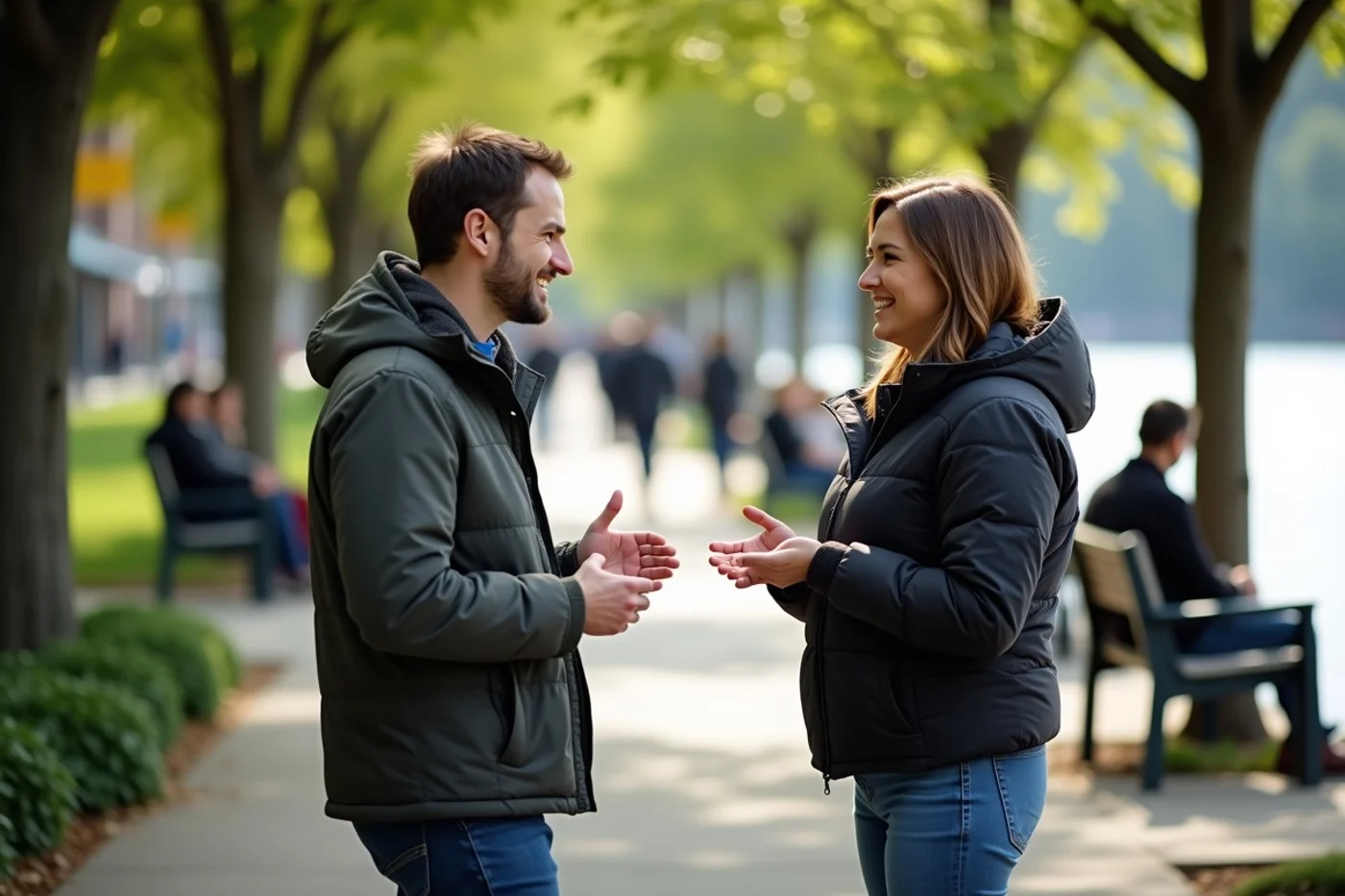
At a volunteer event, the work itself is your opening, but the timing matters. Start during introductions, setup, breaks, transitions, or cleanup, then let the shared task guide the conversation. This approach keeps the service activity in view while giving you a genuine way to learn whether you enjoy talking with the person.
By Meet Naturally Editorial Team · Editorial policy ·
Find conversation windows that do not disrupt the service

The first few minutes often reveal the best opening. People are learning the assignment, finding supplies, and settling into their roles. Introductions and setup create natural contact because everyone is orienting themselves at the same time. A brief question about where something belongs or how the task works fits the moment.
Focused work calls for a different judgment. Someone carrying materials, speaking with a coordinator, handling a time-sensitive task, or concentrating on a person they are helping needs attention on the assignment. Interrupting then makes the conversation feel imposed, even if the opening line is polite.
Breaks, transitions between tasks, and cleanup offer more breathing room. A short exchange during these windows has a clear beginning and an easy end when the group returns to work. Watch the rhythm of the event. The best opening appears when the service pauses, not when someone else is relying on their concentration.
Start with what you are doing together
A shared task gives the conversation a subject that belongs to both of you. Ask how the person became involved, what part of the assignment they are handling, or what they have noticed at the event. These questions feel grounded because they respond to the setting in front of you.
Their answer will show whether the exchange has energy. A detailed reply, a question back, or a relaxed pause before returning to work suggests room for another turn. A one-word response, repeated glances toward the task, or a quick departure signals that the conversation should end there.
Keep the first exchange curious, not evaluative. The person is volunteering, not attending a singles mixer. Shared service creates an opening for conversation; it does not establish romantic interest. That distinction keeps your attention on the person and the work, not on forcing an outcome.
Let shared purpose lead toward personal common ground

| Step | Action |
|---|---|
| 1. Follow the first answer | Ask one related question about their interest in the cause, the task, or the community. Stay with the subject they introduced. |
| 2. Offer a small detail about yourself | Mention what brought you to the event or what kind of activity you enjoy. Personal information works best when it connects to the current conversation. |
| 3. Look for a shared thread | Connect on a neighborhood, hobby, type of event, or future community activity. Reciprocal questions keep the exchange from becoming an interview. |
| 4. Test the next step lightly | When the work is finished, refer to the shared interest and see whether they seem interested in continuing the connection outside the volunteer shift. |
Keep the interaction respectful in a service setting
A volunteer event has a purpose that comes before socializing. Long conversations during an active assignment can pull someone away from their role or make them feel watched while they work. Keep exchanges brief when duties are underway and let the other person return their attention to the service.
Romantic questions, comments about someone's body, and repeated attempts to regain their attention change the tone quickly. Participation in the same event is not permission for persistent attention. When the person turns back to the task, joins another group, gives short replies, or declines contact, accept the signal without asking for an explanation.
Respect also protects the group atmosphere. A volunteer should be able to finish the event without avoiding someone or worrying that a polite conversation created an obligation.
Suggest a simple continuation after the work is done
The end of the event provides the cleanest moment for a next step. Mention a public activity connected to what you discussed, such as another community event, a class, or a local interest you both raised. The invitation should stand on its own and leave the person free to answer without managing your disappointment.
Asking whether they would like to stay in touch is more direct than trying to manufacture another reason to meet. You can offer your number if that feels less intrusive, or ask whether they would like to exchange contact information. Keep the request separate from the volunteer role. They are agreeing to continue a conversation, not signing up for another obligation.
Enthusiasm has a recognizable shape: the person engages with the idea, suggests timing, or offers another way to connect. Hesitation, vagueness, or a polite decline calls for a simple acknowledgment and a return to the group. From there, take one of two paths: follow up about the shared public activity when interest is mutual, or let the connection end as a pleasant volunteer conversation.
A volunteer event works best as a setting for discovering conversational common ground, not as a shortcut to instant intimacy. Start when the work pauses, connect through the task, and make one clear invitation after the service ends. When the response is warm, suggest a public activity linked to your conversation. When it is guarded or uncertain, thank the person and rejoin the event.