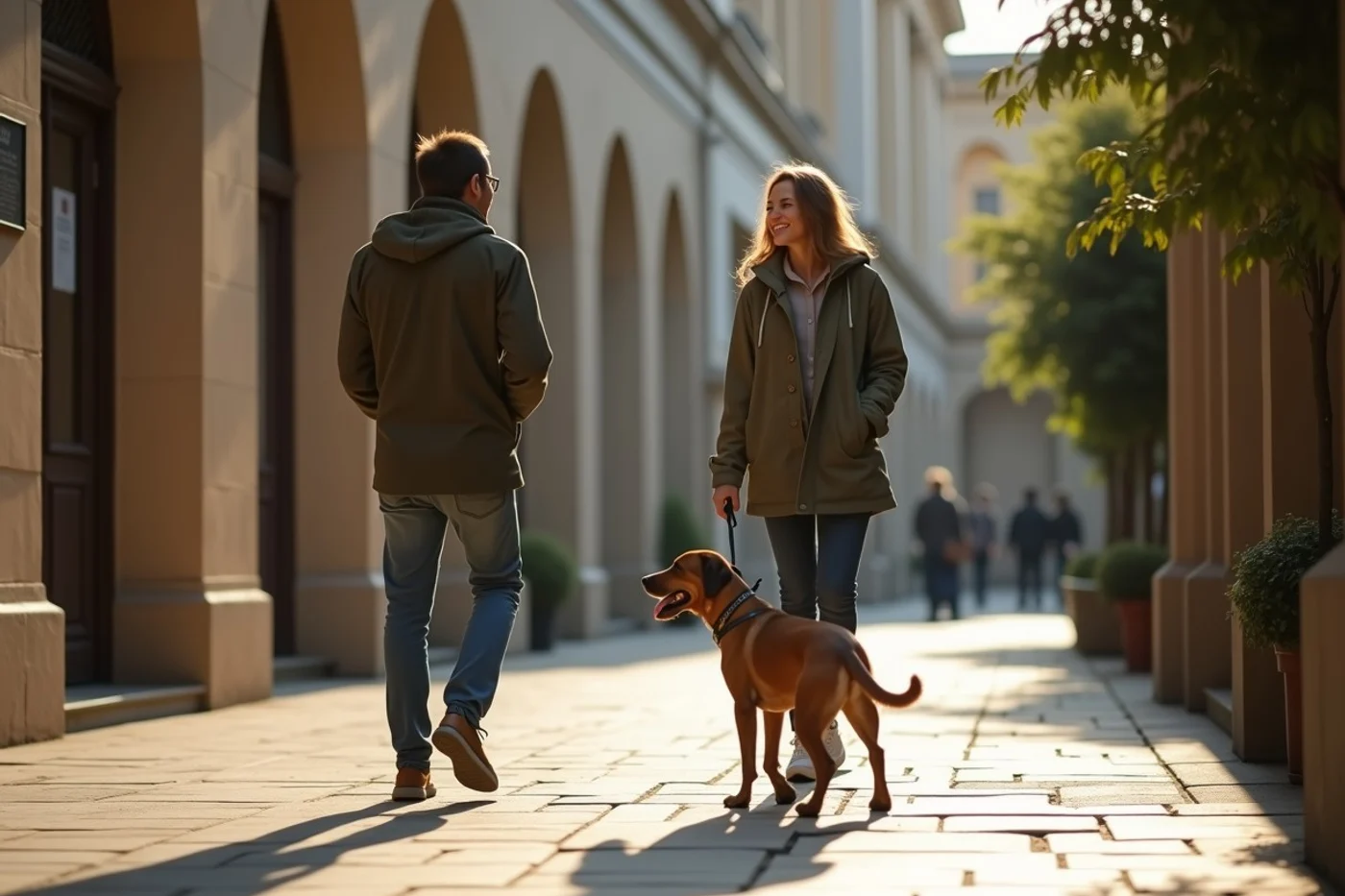
The same block at roughly the same hour changes a dog walk from a passing errand into a social setting with familiar faces. To learn how to meet someone while walking your dog, establish a repeatable route, let the dogs supply the opening, and keep early exchanges brief. The strongest connections usually develop across several ordinary walks, when recognition replaces the pressure of a cold approach.
By Meet Naturally Editorial Team · Editorial policy ·
Familiar routes make it easier to see the same people again
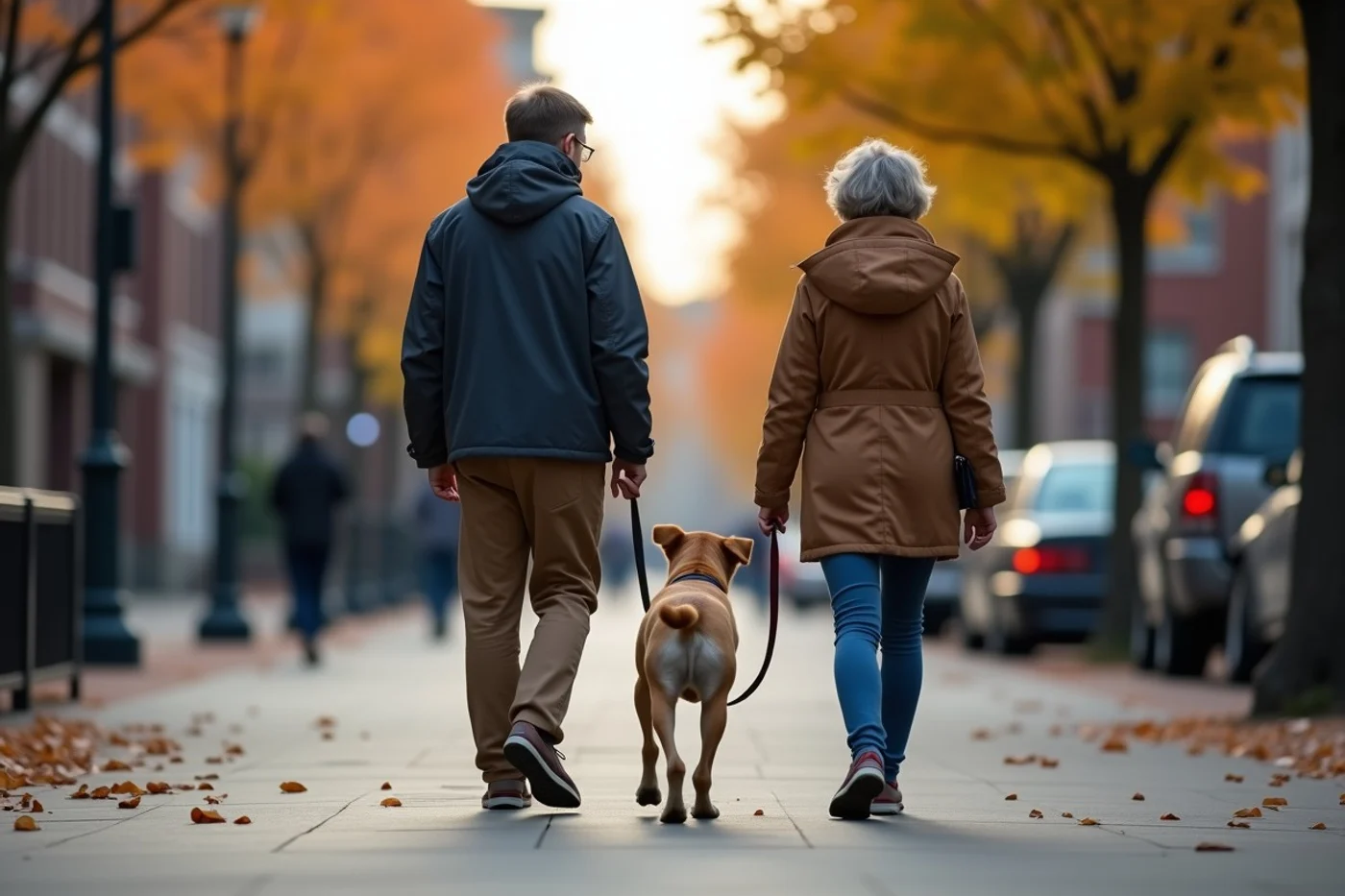
A neighborhood loop used before work or after dinner often reveals the same walkers within a week. That pattern matters more than finding a supposedly perfect place to meet singles. People recognize a familiar dog before they remember a name, and recognition lowers the social temperature for everyone involved.
Dog parks create longer pauses when the dogs are comfortable playing, while neighborhood sidewalks produce short greetings and local trails tend to support a few minutes of conversation at a junction or overlook. Each setting has a different rhythm. Pick one or two places that fit your normal routine and keep the time reasonably consistent. A route you genuinely enjoy will hold up better than a special outing built solely around meeting people.
Lead with a simple observation about the dogs
The opening should fit what is already happening. A remark about two dogs matching each other’s pace, a familiar dog appearing on the same trail, or a playful dog’s enthusiasm for a particular toy invites an easy response. Questions about a dog’s name, breed mix, or usual walking route also stay anchored in the moment.
Dog-centered conversation works because it leaves room for a short answer. A person who wants to continue will often add a detail, ask about your dog, or slow down alongside you. When the response is brief, acknowledge it warmly and continue your walk. Not every pleasant exchange needs a second subject. For someone who is shy, these small interactions build comfort without turning each walk into a test of nerve.
Read both dogs and owners before you join an interaction
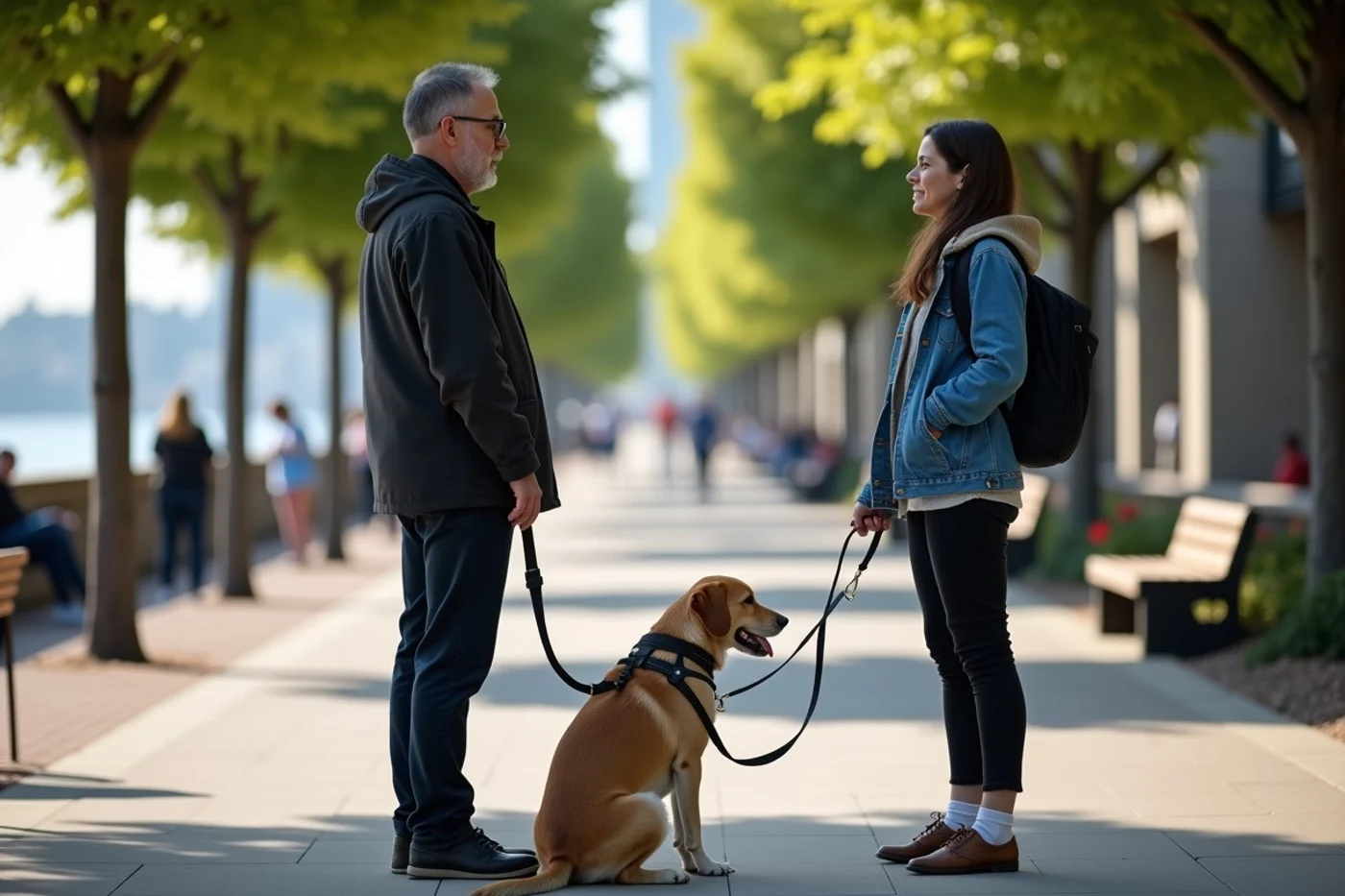
Pace and body position reveal a great deal. Someone moving quickly, facing forward, speaking on the phone, wearing headphones, or concentrating on a dog’s leash has signaled that this is not a conversational moment. The same is true when a dog looks tense, is pulling away, or is receiving focused attention from its owner.
A relaxed owner who makes eye contact, smiles, lingers while the dogs sniff, or turns their body toward you has left an opening. Still, the dogs set the first boundary. Keep space if either dog seems overwhelmed or uninterested, and do not let a social impulse turn the walk into an intrusion. A brief greeting is enough to establish familiarity; a receptive moment will show itself through mutual engagement, not persistence.
Let recurring walks turn into an easy connection over time
Familiarity grows through small details: the dog’s name, the route someone takes after work, or the fact that their older dog prefers a slower lap. Mentioning one of those details on a later encounter shows that you were present without making the interaction unusually intense. Soon, a nod across the street develops into a few minutes walking in the same direction.
After several warm encounters, a shared section of the route or a casual dog-park visit is a natural next step. Keep the invitation tied to the routine already forming, then let the answer set the pace. Some people will remain pleasant walking acquaintances, and that is still a worthwhile result. Others will begin to ask about your day, seek you out on the route, or extend the conversation after the dogs have settled.
Commit to one walking window and one repeat-friendly route for the next couple of weeks. Watch which faces recur, greet the owners whose dogs and body language welcome contact, and let recognition do the early work.