
Running clubs bring adults together at the same time with an immediate shared subject: the route ahead. To meet people through running clubs, join a group suited to your pace, return often enough to become familiar, and let conversations develop before or after the run. For example, a newcomer who attends the same Thursday evening group for several weeks will soon recognize the regulars, the usual pace clusters, and the post-run crowd.
By Meet Naturally Editorial Team · Editorial policy ·
Running clubs create repeated contact around a shared interest
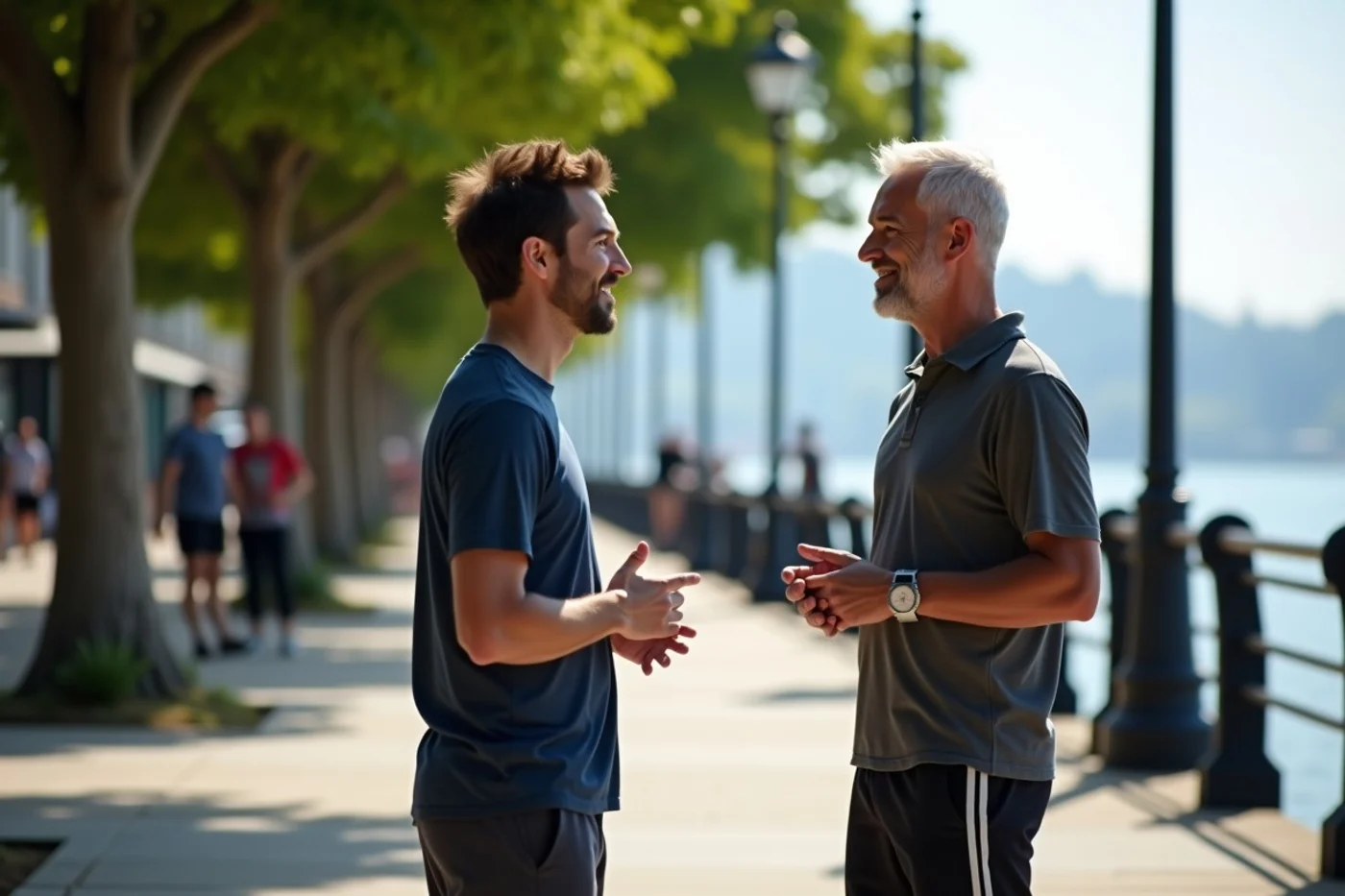
A single run is a social introduction. A recurring club becomes a small community with its own routines: people gather near the meeting point, sort themselves by pace, compare routes, and often linger after finishing. That repetition matters. Names, faces, and small bits of conversation have time to accumulate without anyone needing to manufacture an excuse to talk.
Running also supplies a built-in rhythm for connection. During an easy stretch, conversation tends to stay light because attention remains on breathing, footing, and pace. After the run, people have more room to talk about local trails, an upcoming event, work, or weekend plans. Friendship often develops first; attraction sometimes follows. Neither outcome requires the club to become a singles event.
That distinction protects the group. Show up because you value the run and the people around it, not because every attendee is a dating prospect. Members notice who respects the activity, welcomes different ability levels, and contributes to a relaxed atmosphere. Those are the people others want to know beyond the route.
The right club depends on pace, structure, and social style
Find local options by searching your city or neighborhood with running club, then read a recent meeting notice for the route, start time, and attendance details. A trial visit reveals more than a polished description. These differences determine whether a group supports connection or leaves you stranded at the back.
Beginner-friendly or walk-run group
People returning to exercise, newer runners, and anyone who wants conversation at a comfortable effort.
Look for stated pace groups, route lengths, and a clear policy for people who finish later.
Large open group with several pace clusters
Runners who want a wider pool of people and a choice of companions over time.
A big turnout means more introductions, but it also takes more than one visit to find your cluster.
Small recurring neighborhood run
Building familiarity quickly through the same faces and regular post-run routines.
Confirm how often it meets and whether members usually stay for coffee, food, or a club social event.
Training-focused group
People who enjoy shared event goals and structured sessions.
Hard workouts limit conversation during the run. The social value sits mainly before and after the session.
A first visit is easier when you know the usual rhythm
Most first visits begin with a loose gathering near a shop, park entrance, trailhead, or other agreed meeting point. An organizer or regular member often covers the route, turnaround points, pace groups, and where everyone will regroup. Arrive a little early, introduce yourself to the organizer, and ask which group matches your usual comfortable distance and pace.
Once the run starts, groups usually settle into smaller clusters. Stay with people whose pace lets you speak in short sentences without strain. Falling behind is not a social failure; the wrong pace group is simply the wrong fit for that day. Learn the route briefing, follow the group’s plan, and save extended conversation for easier sections or the finish.
The final minutes are often the most social. People stretch, drink water, compare watches, or decide where to head next. Remain for ten or fifteen minutes when the setting allows. A quick goodbye immediately after every run cuts off the part where acquaintances become familiar faces.
The best conversation openings come from the run itself

Use the shared activity as the opening, especially on a first meeting. Ask about the route, a nearby trail, the pace of a particular group, an upcoming club event, or how long someone has attended. Those subjects suit a running club because both people already have something concrete to say.
The choice is simple: stay close to the setting at first, then follow a thread that develops naturally. Someone who mentions a favorite trail has opened a path toward weekend running, local parks, or event plans. Someone who answers briefly while focusing on the workout has signaled that this is a run, not a conversation slot. Respect the tempo and talk with another member after finishing.
Post-run conversation is the best opportunity to move beyond logistics. Refer back to a detail from the route or a topic raised while running, then share a little about yourself. Conversations feel less like interviews when they move between both people’s experiences, not a series of questions from one person.
Consistency turns a casual attendee into a familiar face
| Stage | Practice |
|---|---|
| 1. Establish a regular slot | Attend the same weekly run for several weeks. Predictable attendance lets people connect your name with a familiar face and pace group. |
| 2. Learn the people around you | Use names when you know them and remember one small detail from a previous conversation, such as a planned event or preferred route. |
| 3. Run with different clusters | Spend time with your usual pace group, then join a different easy group on occasion. Greet people across the club without disrupting a focused workout. |
| 4. Join the group beyond the start line | Join the post-run group, take part in shared conversations, and help with a small task when an organizer asks. Showing up reliably matters more than a burst of charm on one night. |
A shared interest can lead to an easy next plan
An invitation lands well after several conversations that both people actively continue. Perhaps the same person seeks you out before the run, stays in conversation after it ends, joins your pace group repeatedly, or brings up a plan outside the club. Those patterns justify a specific next step.
Tie the plan to the connection already forming. Coffee after a future easy run, a recovery meal with a few club members, another club social event, or a short weekend route all fit the setting. For a one-to-one invitation, name the activity and a time frame without turning it into a vague promise to meet someday.
One invitation is enough. An enthusiastic answer moves the connection forward; a hesitant response or a decline settles the matter without drama. Continue treating that person as a fellow member of the club, with the same courtesy you offer everyone else. The group remains a place to run and belong, which is precisely why relationships have room to grow there.
Pick one local group whose pace and schedule fit your actual week, then give it several visits before judging the social fit. Familiarity is the engine here. A club that feels quiet on night one may feel entirely different once people know your name.